
A successful WordPress plugin (or theme - the same method works there too) teaches you the most when you study one specific competitor directly against a fixed set of questions - what it chose not to build, how its positioning changed as it grew, and which single feature its reviews credit most - rather than when you list the general traits successful plugins tend to share.
Our earlier piece on what makes a plugin successful covers those general traits - solving one problem completely, real maintenance cadence, fast support, genuine growth. I bucket this one as the applied version: pick an actual plugin that clearly shows several of those traits, and study it as a specific case rather than an example of a category.
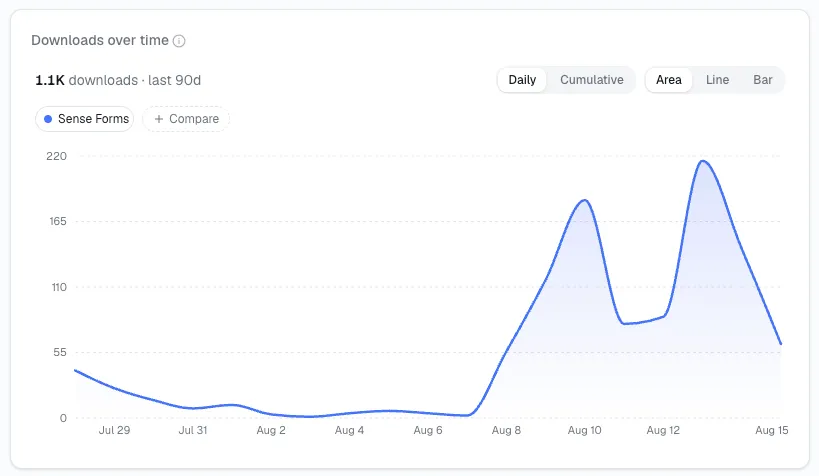
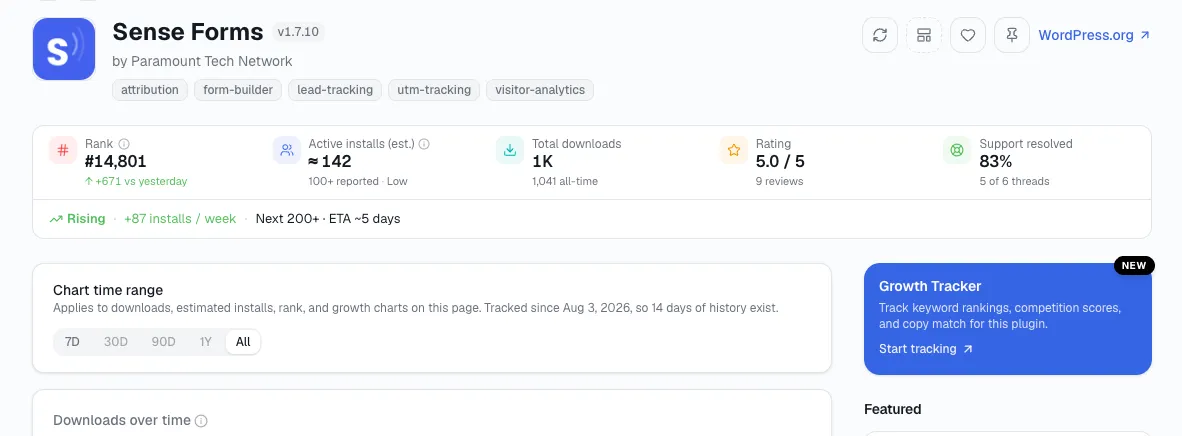
Before you can answer any of that, pull up the competitor on StatWP - head to statwp.com/plugins, search their name, and their overview card gives you the growth trend and rating history as backdrop. The real answers still come from reading their reviews and positioning directly, not from that card.
Look Up the Plugin's Growth Trend
Why studying one plugin beats listing what winners have in common
A general list of traits - "solve one problem well," "keep support fast" - is true and also useless for deciding what to actually do next. It doesn't tell you which trait mattered most for a specific plugin, in what order, or what it cost them to hold onto it as they grew. Studying one real competitor against fixed questions gets you an answer with a name attached, not a principle you still have to guess how to apply.
This is a diagnosis exercise, not a to-do list. The goal isn't to walk away with a checklist item like "add more integrations." It's to understand the actual shape of why one specific plugin works, so that whatever you do next is aimed at something real instead of a generic best practice.
What did it deliberately not build?
I've found a mature, successful plugin's feature list tells you as much by what's missing as by what's there. In my view, a plugin that's stayed narrow for years despite obvious pressure to expand is telling you that staying narrow is part of why it works - the restraint is the lesson, not any specific feature.
Look specifically for the features its own users keep requesting in reviews and support threads that never shipped. I don't read a plugin ignoring a loud, repeated request as necessarily missing an opportunity - it may be protecting the exact simplicity that made it successful in the first place. That's a harder, more useful lesson than "add the feature they're asking for."
How has its positioning shifted as it grew?
Compare its current marketing language to what you can find from its earlier history - an archived version of its site, its oldest reviews, its first few changelog entries. A plugin that started narrowly targeted and broadened its message as it grew is showing you the order it went after audiences: which one it won first, and which one it only felt safe chasing after.
Pay attention to the order, not just the destination. A plugin that started as "the simplest way to do X" and later added "for agencies and enterprise" language usually won its early, narrow audience completely before it ever tried to widen the pitch - broadening the message before winning the first audience is a common way plugins dilute what made them work.
What do its own reviews actually credit?
Read what users specifically praise, not just that they're satisfied. This is what I've generally found: the credited reason is rarely the plugin's most complex feature - it's usually one specific thing done reliably, which is a different, more useful lesson than "it has a lot of features."
Skim past the generic five-star reviews that just say "great plugin" and look for the ones that name something specific - a setup that took five minutes, a support reply that came back the same day, a feature that worked exactly as described the first time. I've come to rely on this read: that specific, repeated praise is the actual signal, while a high star average with vague reviews tells you far less.
This is diagnosis, not a teardown yet
These three questions get you a read on why a plugin works. They don't, on their own, tell you where it's vulnerable or whether the gap between its strength and your own plugin is one you could actually close - that's a more procedural, hands-on exercise that starts from a completed scorecard rather than a set of open questions.
Once you've asked the questions above and picked the one plugin that's genuinely worth the deeper look, reverse-engineering it against the full scorecard is how you turn "here's what I noticed" into a specific, numbered process: rank its own signals against each other, isolate the one doing the real work, map it to what they actually say about themselves, and decide whether the gap is closable. That's the execution version of what this post is the mindset version of.
Where the two most commonly get confused
It's easy to blur these two steps together, so here's the actual difference in practice:
This post - three open questions, applied by reading and judgment. No scorecard required to start, and the output is a qualitative read on why a plugin works.
Reverse-engineering - a fixed four-step process applied to a completed 11-signal scorecard. It requires the numbers already pulled, and the output is a specific gap you can decide to act on or not.
Run this post's questions first on any competitor worth a closer look. Save the full teardown for the one or two names that clear that first bar.
Questions worth asking before you pick a plugin to study
Does the plugin need to be a direct competitor to be worth studying this way?
No. A successful plugin in an adjacent category can still show you a real lesson about positioning or restraint, even if it doesn't compete with you for the same installs. The three questions in this post work on any plugin whose success you want to understand, not only your own direct rivals.
How do I find a plugin's earlier marketing language if their site has changed?
An internet archive of their homepage from a few years back, their oldest reviews, and their earliest changelog entries are usually enough to see how the pitch has shifted, even without a formal record of every version of their copy.
What if a plugin's reviews don't credit anything specific?
A plugin's reviews not crediting anything specific is itself a finding - it means the plugin is winning on something other than a single standout strength, which is worth noting before you move on to a different competitor whose reviews are more specific.
Turn what you noticed into your next move
These three questions work on any single competitor - plugin or theme - you've already found using our guide on locating your real competitors. Once you've picked one worth studying closely, reverse-engineering it against the full scorecard is the next, deeper step.