
Knowing whether your WordPress plugin is growing or stalling means reading growth and momentum together, not trusting either one alone. Positive growth with fading momentum, and negative growth with improving momentum, are both real, common situations - and a single number reports each one as the opposite of what's actually happening.
An earlier piece on telling if a plugin is actually growing covers the false signals that trip people up - downloads, a round install number, a high rating. This one is the next step: turning growth and momentum into one verdict, with rank as the tie-breaker - the same logic works whether you're checking a plugin or a theme. The growth number itself is only as good as how you're reading downloads against active installs in the first place.
Plain answer: To know if your WordPress plugin is growing or stalling, read growth and momentum together rather than trusting either alone, and use rank as the tie-breaker when the two disagree.
Why one good number can still mean bad news
Most plugin authors check one number a month: growth. It's the obvious number to check, and most months it's roughly enough. This is usually how it goes, in my checks: the problem shows up specifically when growth and momentum point in different directions - which happens more often than it sounds, since momentum shifts before growth does, not at the same time as it.
Growth tells you the direction things moved this month. Momentum tells you whether that direction is speeding up or slowing down. Neither one substitutes for the other, and read alone, each can flatly mislead you.
A plugin gaining installs every month can still be headed for trouble if the gain keeps shrinking. A plugin losing installs every month can already be turning around if the loss keeps shrinking. The raw growth number won't show you either pattern - you need both readings at once.
Four combinations, and what each one actually means
Here's the quick version, then the detail for each cell:
| Momentum building | Momentum fading | |
|---|---|---|
| Growth positive | Clean growth - nothing to reconcile | Early warning - a slowdown ahead |
| Growth negative | Early recovery - hiding inside a bad-looking number | Unambiguous decline - both signals agree |
Growth positive, momentum building. Say last month's growth was 2% and this month it's 4%. The clean case - you're growing, and the rate itself is increasing. Nothing to reconcile.
Growth positive, momentum fading. Say growth was 9% last month and 5% this month. You're still growing, but slower than last month's rate. Left alone, I've found this combination is usually a preview of growth turning flat or negative in the coming months, not a current problem - the earlier warning is exactly why I check momentum separately from growth.
Growth negative, momentum improving. Say growth was -6% last month and -2% this month. You're still losing installs, but losing them more slowly. This is an early recovery signal hiding inside a number that still looks bad on its own - worth noticing before growth itself turns positive and you're left wondering when the turn actually started.
Growth negative, momentum also fading. Say growth was -1% last month and -3% this month. The one combination that's unambiguous. Both signals agree, and there's no reading of the data that makes this look better than it is.
When growth and momentum disagree, rank breaks the tie
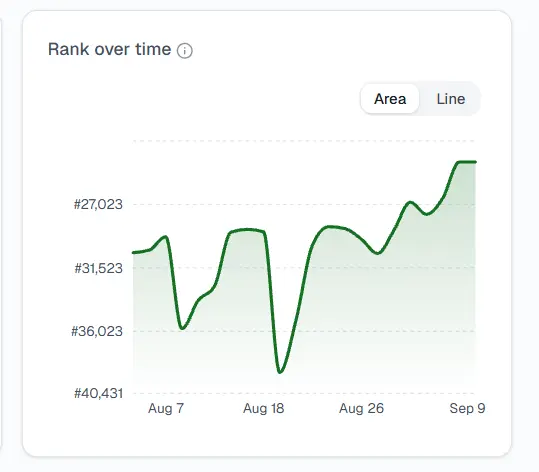
When growth and momentum send a mixed signal, check rank next. Rank moving in the same direction as momentum, rather than growth, is a useful confirmation - it suggests the market is already responding to the trend before it's fully shown up in your raw growth number.
A rank that's climbing while growth is merely flat backs up what momentum is telling you: something is turning before the headline number catches up. A rank that's still falling despite a positive growth month is a reason I trust momentum's warning over growth's reassurance.
Where to actually pull the two numbers you need
Now that you know what the four combinations mean, here's where to find the two readings that put your plugin into one of them:
Open your plugin's page on StatWP - or your theme's, the same combination works there too - and search its name.
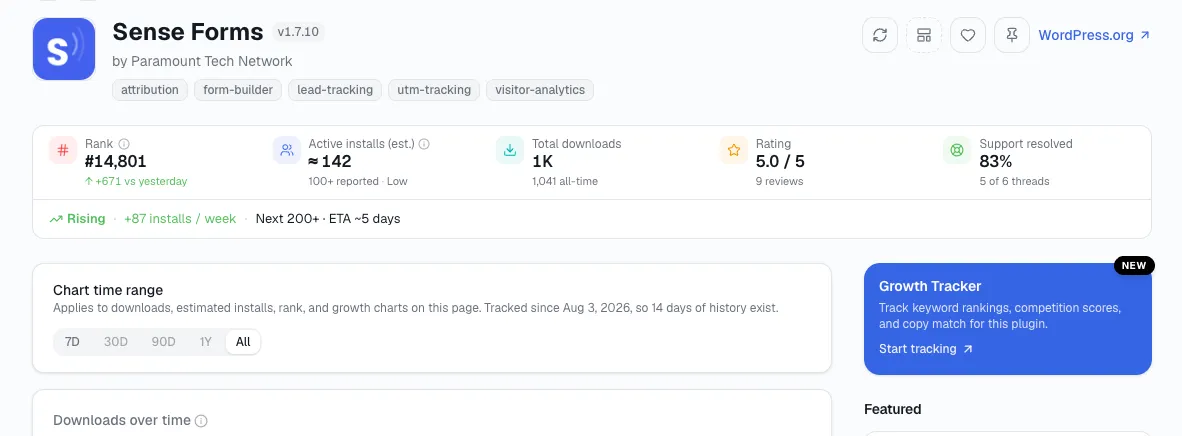
Note the Growth % figure on the overview card - that's your current-month reading.
Check the momentum field next to it, reported as a one-word verdict rather than something you'd need to calculate by comparing two months yourself.
If the two don't clearly agree, glance at the rank-over-time chart on the same page before you settle on a verdict.
Growth, momentum, and rank all sit on that same view, side by side - which is what makes reading them as a combination realistic every month instead of an occasional deep dive.
Check Growth, Momentum & Rank Together
Walking through a real mixed signal
Say your plugin posted -2% growth this month, an improvement from -6% the month before. That's the "growth negative, momentum improving" cell - a recovery hiding inside a number that still looks like a loss.
On its own, growth tells you nothing changed for the better - you're still shrinking. Momentum tells you the shrinking is slowing down fast. If rank moved up over the same stretch, that's the market backing up momentum's story before growth itself has caught up. If rank kept falling despite the improving momentum, I'd wait one more month before calling it a genuine turnaround rather than a one-month blip.
This is exactly why I trust the four-combination read over either signal alone: growth by itself would have me writing off a plugin that's actually about to turn a corner, and momentum by itself would have me celebrating before growth confirms it.
A few things people get wrong here
Isn't fading momentum with positive growth basically fine, since you're still growing? Fading momentum with positive growth is not automatically fine - it's the earliest signal I get that a slowdown is coming, since momentum typically shifts before growth does. Treat it as a heads-up, not noise.
How long should I wait before trusting a combination as real? One month of any combination can still be a blip, especially close to WordPress.org's rounding cutoffs. Two consecutive months showing the same combination is a much stronger basis for a verdict than one.
What if rank doesn't move at all when growth and momentum disagree? A flat rank during a mixed signal usually means the disagreement hasn't shown up in the wider market yet, not that it's resolved. Keep watching it alongside next month's growth and momentum readings rather than treating the flat rank itself as an answer.
Can a plugin sit in the same combination for a long stretch? A plugin can sit in the same combination for a long stretch, especially "growth positive, momentum building" or the reverse - once a trend is genuinely established, it can hold that combination for several months in a row before anything shifts. I find the four-combination check most valuable at the moment a plugin moves from one cell to another, since that's usually the first sign something real changed.
Don't skip the two-month check
Every combination above depends on two months of growth, not one. A single month's growth number can't tell you anything about momentum, because momentum is specifically a comparison between this month's rate and last month's. If you've only got one month logged, you can place your plugin in a growth column, but not yet in a combination - come back once you've got a second month to compare it against.
Where this fits
This verdict is one part of the monthly growth-tracking check - specifically the step where growth and momentum get read together instead of separately. For the concept momentum is built from, see what plugin momentum actually means, and for reading rank specifically over time, see how to track WordPress plugin rankings over time.